After the Front He Found a New Mission: How Oleksandr Trofymenko Prepares Zaporizhzhia Residents for the Threats of War and Develops Support for Veterans
Oleksandr Trofymenko, from the Melitopol area, lived abroad for more than 15 years and had a successful business. After the start of the full-scale invasion he returned to Ukraine to defend it. He served as a drone operator in the Donetsk, Zaporizhzhia and Kherson directions.
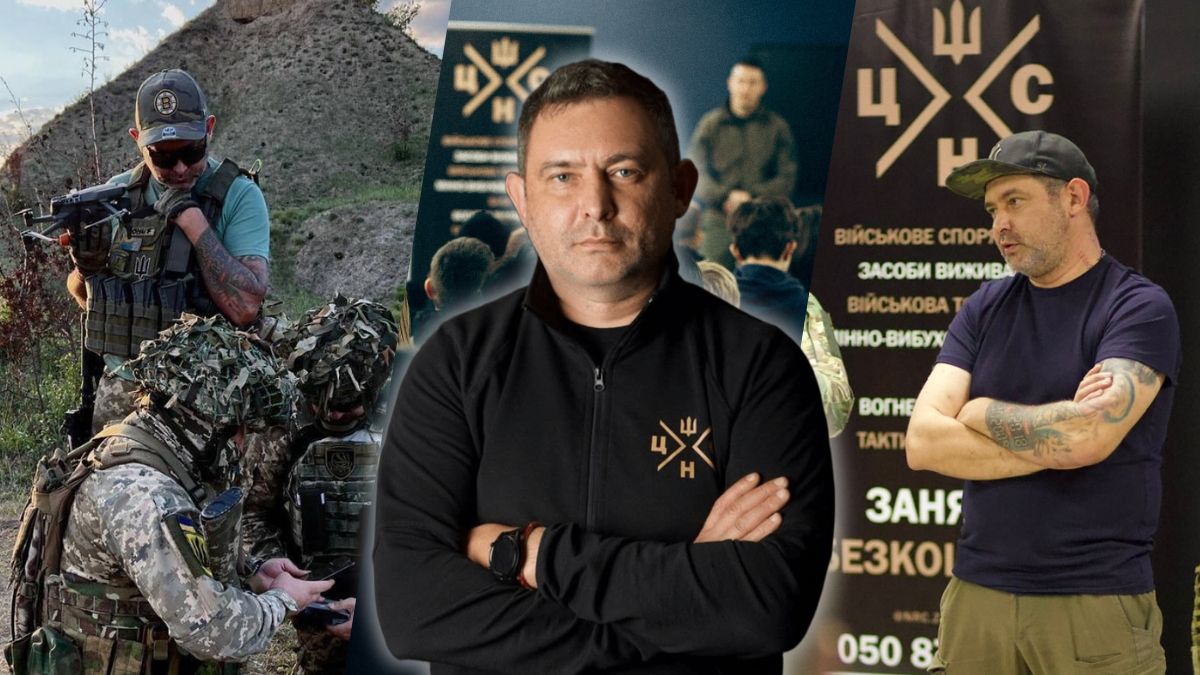
Oleksandr Trofymenko, from the Melitopol area, lived abroad for more than 15 years and had a successful business. After the start of the full-scale invasion he returned to Ukraine to defend it. He served as a drone operator in the Donetsk, Zaporizhzhia and Kherson directions.
After being wounded and demobilised, Oleksandr faced difficulties adapting to civilian life. His own experience prompted him, together with his comrades-in-arms, to found the public organisation “Razom.UA”, which helps veterans overcome difficulties and find themselves after service.
Today Oleksandr heads the Zaporizhzhia Regional Centre for National Resistance and Veterans Policy. Here civilians are taught military skills, and veterans are helped to find new opportunities for self-fulfilment.
Oleksandr Trofymenko spoke to “Pershyi Zaporizkyi” about his combat path, his return to civilian life and his new mission.
He Left a Business in Denmark to Defend Ukraine
Before the start of the full-scale invasion, Oleksandr Trofymenko lived in Denmark. He moved there in 2005 under a student exchange programme from the Tavria State Agrotechnical Academy (now the Dmytro Motornyi Tavria State Agrotechnological University), but later stayed in the country.
In Denmark, Oleksandr founded a company that organised concerts of Ukrainian artists for the diaspora. He had an established life, a stable business and opportunities for growth.
However, on 24 February 2022 everything changed. The man learned about the start of the full-scale invasion from friends who began calling and reporting the Russian attack.
“The first reaction was that this simply cannot be,” Oleksandr recalls.
He finally decided to return to Ukraine after a conversation between his elder son and his grandmother, who at that moment was under shelling in the village of Vesele in the Melitopol area.
“They were talking, and then she says she has to go to the shelter because shelling has started. My son hangs up and starts crying very hard. And I ask: ‘Why are you crying?’ He answers: ‘I feel sorry for Grandma.’ That really struck me. I thought: I, her son, am here, and my son is crying for his grandmother. So I decided to return,” the man says.
Meanwhile, Russian forces quickly seized the Melitopol area, and Oleksandr's relatives found themselves under occupation.
At the beginning of March the man arrived in Lviv. While waiting for equipment, he volunteered and helped people fleeing the war. Later he set off for Zaporizhzhia.
He Spent Two Years at War
After his relatives were evacuated in April, Oleksandr joined the Khortytskyi Regiment, which was defending Zaporizhzhia, and underwent training. In May he joined the reconnaissance platoon of the 501st Separate Marine Battalion, where he became an unmanned systems operator. In the army he received the call sign “Denmark”.
Oleksandr carried out combat missions in the Donetsk, Zaporizhzhia and Kherson directions.
“At war it is hard in any direction,” the veteran recalls. “But at Krynky in Kherson Region it was the hardest for me.”
He recalls one day on the right bank of the Dnipro when Russian forces dropped 71 guided aerial bombs along a line of contact about 10–15 kilometres long. According to Oleksandr, it was an extremely hard experience.
In November 2023, during fighting in this direction, the man was wounded. He sustained fractures in the shoulder area and sternum and severe concussions. Treatment and rehabilitation lasted about four months.
Because of his health, Oleksandr could no longer return to carrying out combat missions. On 3 April 2024 he was discharged from military service.
Difficulties After Demobilisation Grew into a Shared Cause of Helping Veterans
Returning to civilian life turned out to be difficult. According to Oleksandr, at that time veterans lacked effective support mechanisms. To arrange payments and documents, one had to figure out the procedures on one's own, turn to various institutions and push for one's issues to be resolved.
After what he had been through at the front, it was hard for the man to accept that instead of proper support he was forced to overcome bureaucratic obstacles.
“Bureaucracy… Very many times the question came up: what did we fight for — to run around with papers? There was such disappointment…” Oleksandr admits.
Having faced these problems, in September 2024 he, together with his comrades-in-arms, founded the veteran public organisation “Razom.UA”. They set themselves the goal of helping former servicemen adapt to civilian life, obtain the necessary support and overcome everyday difficulties. This is how Oleksandr began his work in the field of veterans policy.
Preparing Society for Resistance: How Trofymenko Continues to Serve in Civilian Life
On 3 April 2025, exactly a year after his discharge from service, Oleksandr Trofymenko headed the Zaporizhzhia Regional Centre for National Resistance and Veterans Policy. He took part in developing the institution's concept and began developing its activities.
According to Oleksandr, national resistance involves servicemen passing on combat experience to civilians. That is why it is important that training is conducted by people who know about war not from textbooks but from their own experience.
The centre teaches firearms training, tactical medicine, drone operation, navigation without GPS, survival in difficult conditions and mine and explosive safety.
The team also cooperates with educational institutions. In schools, the centre's specialists conduct practical classes for the subject “Defence of Ukraine”, while teachers teach the theory. In addition, the centre interacts with the youth movement “Baida” and other institutions.
According to the head, over a year and a half of work the centre has trained more than 1,500 people, mostly civilians, including schoolchildren and students.
A separate area is the training of employees of Zaporizhzhia's municipal enterprises. Given the threat of drone attacks, it is important for them to know how to act in dangerous situations and provide pre-medical aid. According to Oleksandr, since mid-June about 2,000 employees of municipal institutions have completed tactical medicine training.
The centre also looks after the commemoration of fallen defenders. In July 2025 it took under its care the programme “On the Shield”, which provides for escorting funeral columns and honourable burial of fallen servicemen.
At the same time, the centre is developing the area of veteran support. At present the corresponding department is at the stage of formation. It is meant to accompany former servicemen and help them resolve legal and other issues. Further plans include creating a coordination headquarters for missing persons and prisoners of war.
He Sees Ukraine's Future in Unity and Readiness to Resist
Despite the danger of frontline Zaporizhzhia and separation from his children, who remain abroad, Oleksandr Trofymenko continues to work for the sake of Ukraine's future.
“I want to change the country,” the veteran admits.
Planning work for the long term in a frontline city is hard, because tasks change depending on the security situation. At the same time, one of Oleksandr's main priorities is to involve young people in training, foster responsibility and prepare them for conscious participation in the life of the country.
He is convinced that such classes should not only give practical skills but also help young people realise the importance of defending their state.
“A conscious generation is very important!” stresses the head of the centre.
In Oleksandr's opinion, the need for national resistance will remain even after the war ends. Ukraine must be ready to defend itself, and for that we need people who understand possible threats and know how to act in critical situations.
“Ukraine must be made strong. If we raise conscious and strong people, no one will ever attack again,” he explains.
To veterans who do not know whether it is worth seeking support, Oleksandr advises not to stay alone with their problems. He stresses that there are organisations and other institutions that provide legal and other assistance free of charge, and that talking to people with similar experience can become an important step towards adaptation.
Oleksandr Trofymenko told “Pershyi Zaporizkyi” in more detail about how the Zaporizhzhia Regional Centre for National Resistance and Veterans Policy works, what skills civilians are taught here and how veterans are supported, in a separate article.
Text – Oleksandr Nosok, photos – Zaporizhzhia Regional Centre for National Resistance and Veterans Policy
This material was created within the framework of a project by the Institute of Mass Information with the support of the Ministry of Foreign Affairs of the Netherlands. The content of the publication does not reflect the official position of the IMI and the Kingdom of the Netherlands.
Source: Pershyi Zaporizkyi (1news.zp.ua), https://1news.zp.ua/pislya-frontu-znajshov-novu-misiyu-yak-oleksandr-trofymenko-gotuye-zaporizhcziv-do-zagroz-vijny-ta-rozvyvaye-pidtrymku-veteraniv/