Doctors and pharmacists demand stepping up the fight against illegitimate advertising of fake medicines that uses leading medical brands
Kyiv. March 6. INTERFAX-UKRAINE – Doctors and pharmaceutical manufacturers demand stepping up the fight against illegitimate online advertising of fake medicines that uses well-known brands and the faces of leading medical experts. As Borys Todurov, doctor of medical sciences and director of the Ministry of Health's heart institute, stressed at a press conference at the agency “Interfax-Ukraine” on Tuesday, fraudulent advertising on Ukraine's pharmaceutical market can take
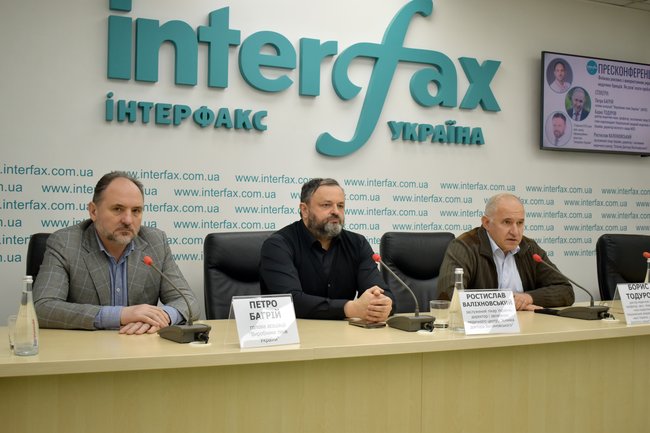
Kyiv. March 6. INTERFAX-UKRAINE – Doctors and pharmaceutical manufacturers demand stepping up the fight against illegitimate online advertising of fake medicines that uses well-known brands and the faces of leading medical experts.
As Borys Todurov, doctor of medical sciences and director of the Ministry of Health's heart institute, stressed at a press conference at the agency “Interfax-Ukraine” on Tuesday, fraudulent advertising on Ukraine's pharmaceutical market can take hundreds and thousands of lives. As an example, he also cited the fact that, in particular, fake drugs are often advertised on the internet in his name.
“On the internet, on Facebook, drugs are offered in my name that we are supposedly developing. Do not believe that this is so – we do not take part in developing new medicines. We perform operations, we deal only with surgery,” he said.
Todurov noted that he answers countless messages every day about fake drugs that he supposedly develops, and there are “dozens” of such drugs. One of the latest such fake medicines sold over the internet in his name is “Normo Kardiks”.
Todurov noted that he has already turned to law enforcement agencies with statements about such precedents, and that the cyber police have already opened a criminal case over the use of his name and the names of his colleagues.
“It is very hard to track such fraudsters, they are often abroad. But I think at least those people who distribute fake drugs in Ukraine can be found and caught – they have phones and a certain address, they can be tracked,” the director of the heart institute commented.
Todurov noted that advertising of fake drugs is often created using artificial intelligence (AI) technologies, which make it possible to produce plausible videos using the images and voices of specific well-known doctors.
For his part, Rostyslav Valikhnovskyi, honored doctor of Ukraine and director and founder of the medical center “Dr. Valikhnovskyi Clinic”, said that cases of at least eight drugs and dietary supplements allegedly treating joints, varicose veins, the heart and rheumatic diseases being distributed in his name have been recorded.
“This has absolutely nothing to do with reality. I want to state officially that it is not true, and our brand has nothing to do with these drugs,” he said.
Valikhnovskyi noted that the clinic also contacted the cyber police of Kyiv, and law enforcement managed to block the websites hosting such information within one day. At the same time, he noted that it was not possible to resolve the problem with Facebook.
“It is very hard to resolve this problem with Facebook during the war, so through this press conference I would like to appeal to the interior minister and the prosecutor general to take this problem under their personal control,” he said.
Valikhnovskyi noted that “if nothing is done now, at the beginning of AI development, we will not be able to fix anything later”.

At the same time, he stressed that clinics and medical professionals cannot identify fraudsters and fight them on their own without law enforcement agencies.
For his part, the head of the association “Manufacturers of Medicines of Ukraine” (AVLU) Petro Bahrii specified that in wartime conditions it is rather difficult to assess the size of the market for such fake drugs, in particular because of the ban on inspections.
“We cannot accurately assess the size of such a market, especially during the war. But we are interested in making Ukraine's pharmaceutical market transparent and the promotion of medicines lawful, because we know the responsibility for people's health,” he said.
Bahrii noted that the APLU was one of the initiators of introducing criminal liability for unfair advertising and for producing and distributing fake drugs.
“I support my colleagues and appeal to law enforcement agencies and to everyone who can help overcome this shameful phenomenon and stop these fraudsters who today, using the well-known brands of medical professionals, promote in their names fake drugs that harm health and even kill,” he said.
Bahrii also stressed that leading domestic pharmaceutical companies are constantly developing R&D, creating new drugs according to international standards of proven efficacy, safety and quality, and investing significant funds in this area.
“Fake drugs sold over the internet in this way harm people's health, but they also harm the economy, because fraudsters, unlike pharmaceutical manufacturers, do not pay taxes, do not create jobs, and do not invest in developing their brand or in the country's economy. The business of these fraudsters harms everyone, and law enforcement officers must solve this problem,” he summed up.