Energy without pathos: why Ukrainian business needs strategy, not charity
The business brunch “Energy of Business: Resilience and Development” brought together company owners, investors, lawyers and communications professionals in Kyiv. The main conversation was about how social responsibility is turning from one-off help into a tool of long-term development.
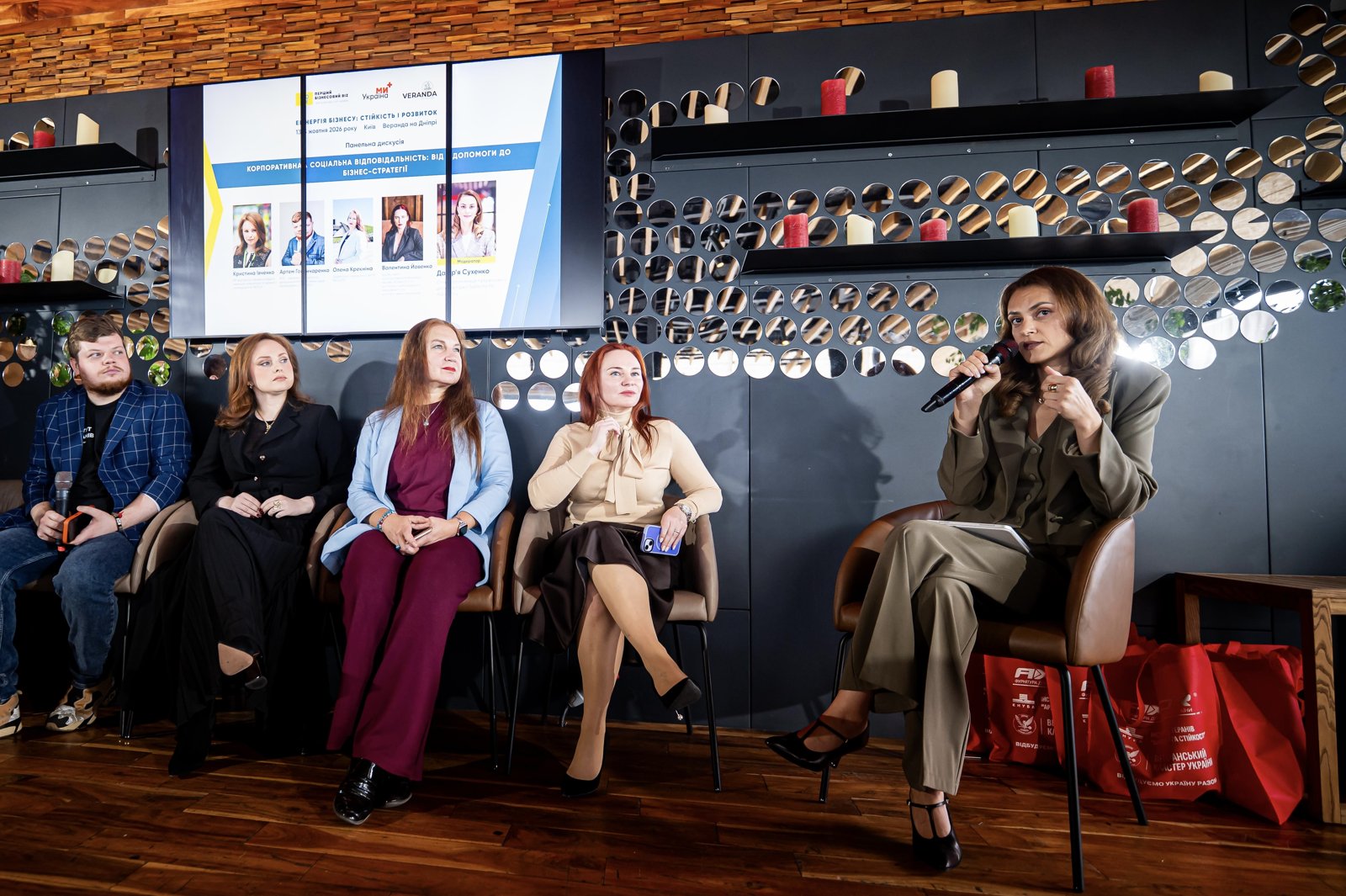
On 13 October the business publication “PERSHYI BIZNESOVYI | BIZ” held a brunch at which, in a single day, the whole cycle of managing a company was covered: people, capital, technology, law and reputation.
According to the publication's co-founder Viktoriia Shteinberg, doing business in Ukraine today takes courage. War, labour shortages, energy risks and volatile consumer demand have become everyday working conditions.
From help to strategy
One of the most practical for companies was the panel discussion “Corporate Social Responsibility: From Help to Business Strategy”. It was moderated by Daria Sukhenko, co-founder and creative director of Trembita PR Agency. Speakers included Valentyna Iovenko (“9-1-1 Pharmacy”), Krystyna Ivchenko (NOVUS), Olena Kreknina (AXOR INDUSTRY) and Artem Honcharenko, PhD, head of the KNUCA Veterans Institute “Architecture of Resilience” and coordinator of the Veterans Cluster of Ukraine.
The participants agreed on one thing: Ukrainian business has already passed the stage when supporting the military, veterans and communities meant first of all a quick response to a request. The next level is measurable programmes with clear accountability, integration into corporate strategy and a real effect on employment, rehabilitation and people's development.
For business this is also a question of the future labour market. Veterans and their family members are not a “social project” but a human-resources and entrepreneurial asset of the country, which needs infrastructure for returning to a profession, training and starting one's own business.
Artem Honcharenko: veterans as a driver of reconstruction
One of the most substantive views on the subject was presented by Artem Honcharenko. The KNUCA Veterans Institute “Architecture of Resilience” works at the intersection of education, rehabilitation, professional development and partnerships with employers, while the Veterans Cluster of Ukraine unites universities, business, communities and international partners. Artem Honcharenko consistently argues that education for veterans is not formal retraining but a tool of social adaptation, mental recovery and return to active life. Veterans' programmes offer training, retraining, master's and doctoral studies, psychological support, participation in reconstruction projects and links with employers.
Artem Honcharenko:
“Ukrainian business today has a unique opportunity not just to help veterans but to create an environment of professional fulfilment for them. A veteran is a person with experience of responsibility, risk management and work in difficult conditions. If a company can see and integrate this experience, it gets not a cost of corporate social responsibility but a strong team and a contribution to rebuilding the country.”
Olena Kreknina: CSR as part of HR strategy
The practical business dimension of the subject was presented by Olena Kreknina, marketing director of AXOR INDUSTRY. The company does not limit itself to occasional participation in veterans' initiatives: AXOR cooperates with the KNUCA Veterans Institute and the Veterans Cluster of Ukraine and supports programmes for training, employment and an accessible labour market.
Olena Kreknina:
“Social responsibility begins not with a banner or a charity cheque but with the question: is the company ready to create conditions in which a veteran can work, develop and influence the result. For us this is part of corporate culture and long-term strategy, not a one-off initiative.”
This approach shows how CSR can work not as a PR tool but as a management practice: the company invests in people, gets a loyal team and builds the reputation of an employer that acts consistently.
The business brunch showed that the resilience of Ukrainian companies is formed not only by financial reserves or technology but also by the ability to build an ecosystem in which people have a chance to recover, learn and work. In this sense the experience of Artem Honcharenko and Olena Kreknina is telling: the veterans' theme is becoming a joint project of business, education and the state.