Integrating rehabilitation into everyday life: how the early intervention service works at the public organization “Vidchui”
The team helps families with children from birth to the age of four use play, mealtimes, walks and getting dressed as natural opportunities for development. A child's development is not limited to sessions in a specially equipped room. In early age it takes place primarily in repeated everyday situations – during breakfast, play, a walk, bathing, getting dressed and communicating with loved ones. It is precisely…
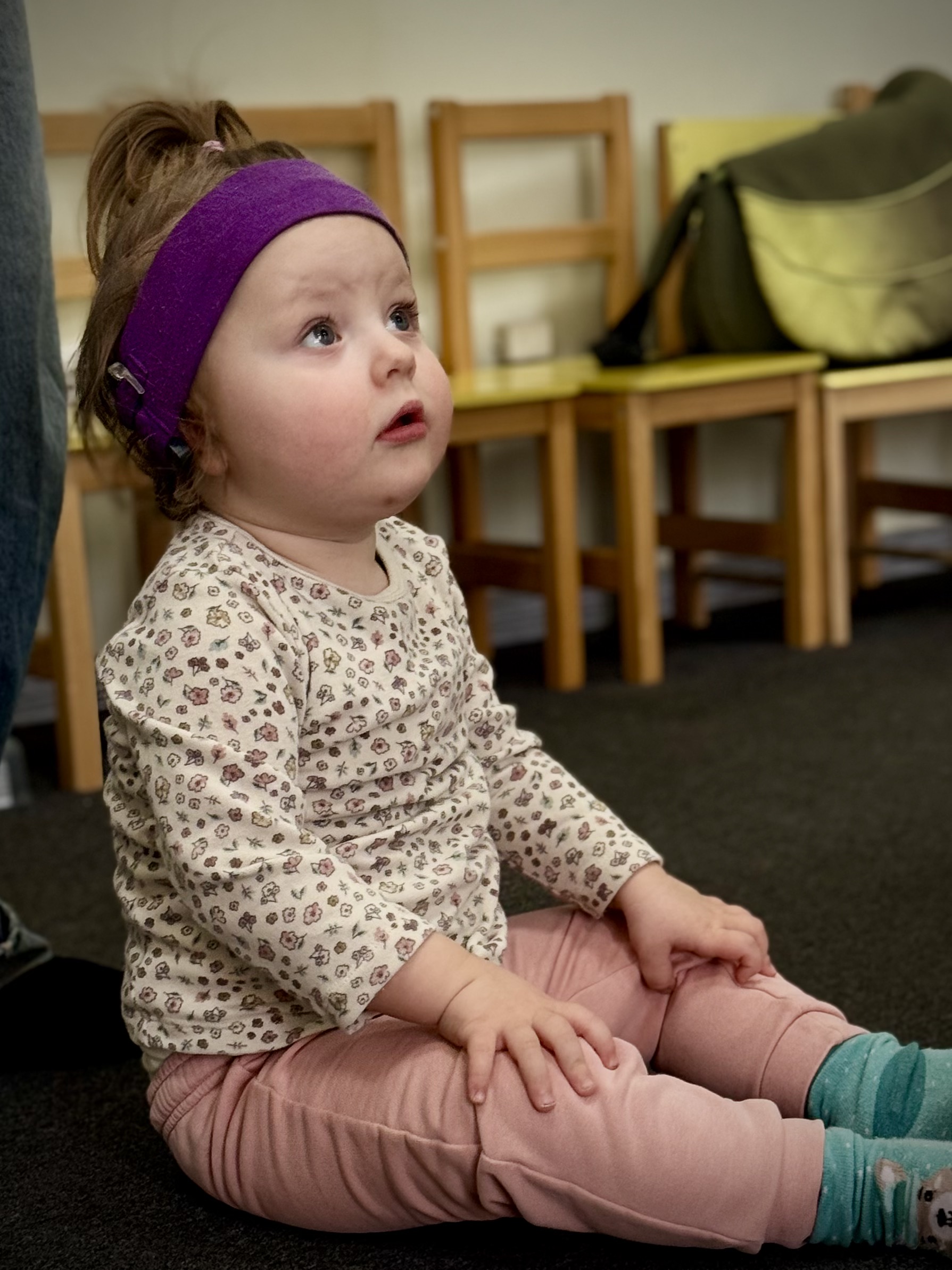
The team helps families with children from birth to the age of four use play, mealtimes, walks and getting dressed as natural opportunities for development.
A child's development is not limited to sessions in a specially equipped room. In early age it takes place primarily in repeated everyday situations – during breakfast, play, a walk, bathing, getting dressed and communicating with loved ones
Early intervention is built on exactly this. Specialists do not separate development from the life of the family. They help parents see how to support their child in the familiar situations that repeat every day.
During a home visit, the team can join in a game familiar to the child. Together with the parents, the specialists choose understandable words, gestures and actions, pause so that the child has time to respond, and look for ways to support the child's communication in the situations that are usual for the family.
The aim of such work is not to conduct one “correct session.” What matters is to find a solution that the family can use on its own in everyday life.
Who this service is for
Early intervention is a service for families with children from birth to four years of age who have developmental disorders or are at risk of developing them.
There is no need to wait for a diagnosis before getting in touch. The reason can be the parents' concern: the child does not react to a voice or loud sounds, does not use the ways of communication available for his or her age, has lost a skill already acquired, or has difficulties with movement, play, eating, sleep or interaction.
Such signs are often called developmental “red flags.” They are not a diagnosis and give no grounds for drawing conclusions about the child's condition on one's own. They are a signal that the child's development is worth assessing further together with specialists.
It is the parents who often notice the signals first. They see the child in dozens of situations that are not visible during a short examination: how the child wakes up, reacts to loved ones, asks for something wanted, plays, calms down or climbs steps.
That is why early intervention begins with an attentive conversation about the family's observations, questions and needs.
From the family's question to a specific goal
At the first stage, the team finds out what exactly worries the parents and in which everyday situations difficulties arise. The specialists assess the child's needs and strengths, the conditions in which the child lives and develops, the family's capabilities and the resources already available to it.
A psychologist, a special education teacher, a communication and speech specialist, a physical therapist, an occupational therapist, a social worker, a doctor and other specialists may join the work, depending on the child's needs and the family's request.
The goal is formulated through a specific situation: the child will be able to communicate in an accessible way that he or she wants a drink; will take part in getting dressed; will use a spoon; will sustain a shared game with an adult for longer
Such specific goals are called functional goals – they become the basis of the family plan. The team does not replace the parents and does not decide everything for them. It helps determine the next achievable step and fit it into the family's usual rhythm.
How do the main changes happen?
The meeting with the family usually takes place once a week. It begins not with checking homework, but with a conversation about what was possible to try after the previous visit, where difficulties arose and what is important to discuss today.
It can be breakfast, a walk, tidying up toys, climbing stairs, bathing or cooking together.
The specialist observes the situation, asks questions, suggests possible techniques and plans together with the parents what they will try before the next meeting.
This is why the result does not depend on a single “magic” exercise. The child gets many natural opportunities to repeat a new action: to ask for something, to respond, to make a choice, to wait for a turn, to keep their balance, to help an adult or to complete part of a familiar task independently.
The main work takes place between visits. During the week, parents use the steps agreed with the specialists in everyday situations. At the next meeting, the team and the family together assess what worked, what should be changed and what the next step will be.
Home is not the only possible location
A home visit means, above all, working in the child's natural environment.
This can be an apartment, a playground, a kindergarten or another place where a specific difficulty arises and where the child will actually need the new skill.
On the playground, the team can help the child join in a shared game. In the kindergarten, it can look for ways to make transitions between activities clearer. At home, it can work on difficulties with eating, getting dressed, bathing or communicating.
This approach makes it possible to work not with a hypothetical task but with a real situation. Solutions are tested right away where the family will actually use them.
What changes for the child and the family?
Changes in early intervention may seem small.
The child more often initiates or maintains interaction with a conversation partner. Begins to show what they want. Gets dressed more calmly. Holds a spoon independently. Stays involved in shared play for longer. Uses a new gesture, sound or word.
Yet behind each such change lies an important step toward greater participation, communication and independence for the child.
Along with the child, the family changes too. Parents gain confidence in supporting their child's development on their own and know whom to turn to if a new need arises. They already understand what can be done, when and how, and gradually become less dependent on constant support from specialists.
This does not mean the same pace or a guaranteed result for everyone. Each child's development has its own dynamics. The value of the service is that the family is not left alone with its questions, receives a clear plan and learns to use it every day.
How to get in touch
If your child's development is a cause for concern, it is advisable to contact a health care facility in your area or an inclusive resource center for a developmental assessment.
You can also write to the early intervention team of the public organization “Vidchui” at the email address vidchui@ukr.net.
In the email, please state:
- the child's name and age;
- the city of residence;
- what exactly is causing concern;
- a phone number or another convenient way to reach you.
The first step does not necessarily have to be a ready diagnosis. Sometimes it is simply a parent's question: “Is my child's development on track?”
The sooner a family receives a professional answer, the more time it will have to support the child during a period when development is especially responsive to help.
This publication was prepared by the public organization “Vidchui” within the project on providing financial assistance in the form of small grants for social services, implemented with the support of the Government of the United Kingdom under the SPIRIT project, in cooperation with the Ministry of Social Policy, Family and Unity of Ukraine, the Fund for the Social Protection of Persons with Disabilities and UNICEF Ukraine, and administered by ISAR Ednannia. The content of this publication is the sole responsibility of the public organization “Vidchui” and does not necessarily reflect the position of the Government of the United Kingdom, the Government of Ukraine, UNICEF, ISAR Ednannia or the Fund for the Social Protection of Persons with Disabilities.


