Rising construction costs may increase infrastructure reconstruction budgets
The cost of construction and installation work in building engineering structures in Ukraine in June 2026 rose by 24.3% compared with June of last year – the highest figure among the main construction segments. According to the State Statistics Service, non-residential construction became more expensive by 23.8% over the same period, and residential construction by 19.2%. On average across the construction industry, the growth
The cost of construction and installation work in building engineering structures in Ukraine in June 2026 rose by 24.3% compared with June of last year – the highest figure among the main construction segments. According to the State Statistics Service, non-residential construction became more expensive over the same period by 23.8%, and residential construction by 19.2%. On average across the construction industry, the growth was 23.1%.
Engineering construction also led in monthly dynamics. In June, compared with May, prices here rose by a further 1.8%, versus 1.3% in non-residential construction and 0.8% in residential.
In the second quarter of 2026, engineering construction and installation work cost 22.4% more than in April–June of last year. The same increase – 22.4% – was recorded in non-residential construction, while residential construction became more expensive by 18.2%.
The quarterly dynamics are especially telling. Compared with the first quarter, prices for engineering work in the second quarter rose by 12.4%, for non-residential work by 12%, whereas in the residential sector the increase was only 0.4%.
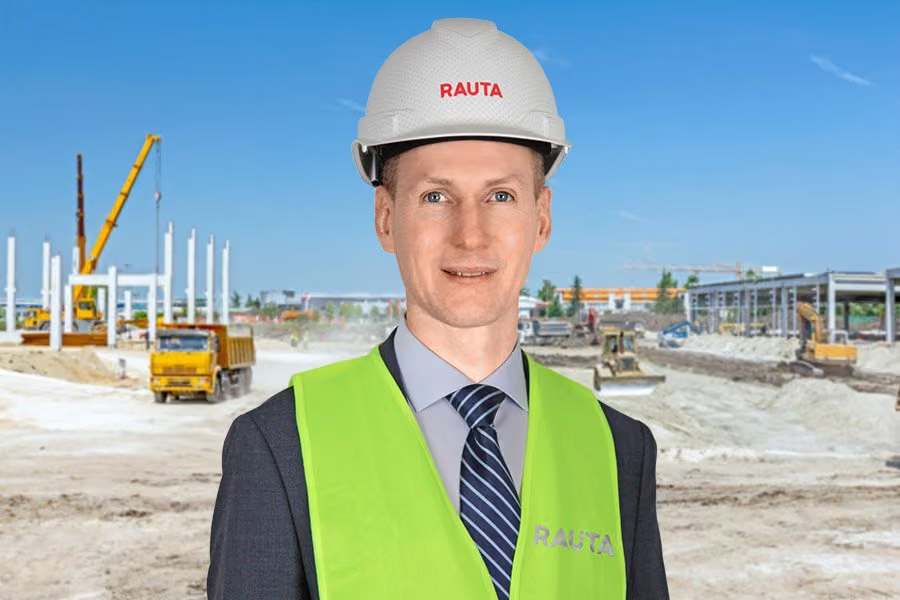
In the opinion of Andrii Ozeichuk, owner and director of the engineering and construction company Rauta, one of the key factors putting pressure on construction costs remains the shortage of qualified workers.
“At the moment the market is short of about 30% of specialists in construction trades,” Ozeichuk noted, commenting on the situation in the industry in February 2026.
According to him, the shortage of personnel has already led to a noticeable acceleration in wage growth. Whereas in 2022–2024 wages in construction grew on average by about 15–20% a year, in 2025 the growth rate reached 25–30%. Pay rose especially sharply for monolithic concrete workers – by 50%, surveyors – by 44% and concrete workers – by 38%.
Thus, the current rise in the cost of construction work is shaped not only by the prices of construction materials and equipment. The cost of the construction work itself and of human labor plays an increasingly large role.
Ozeichuk also drew attention to the long-term nature of the staffing problem. According to him, vocational educational institutions face both a shortfall of students enrolling in construction specialties and their outflow already in the first years of study.
“In the long run, this may lead to an even greater shortage of personnel and slow down the recovery of Ukraine,” believes the owner of Rauta.
According to the company's estimates, the staffing shortage is already forcing construction businesses to look for workers outside Ukraine, in particular in India, Nepal, Bangladesh and Pakistan.
The rise in the cost of engineering construction is of particular significance for Ukraine because of the large-scale need to rebuild energy, transport, utility and other critical infrastructure. According to Rauta's estimate for 2025, the segment of restoration and protection of critical infrastructure facilities already accounted for about 20 % of the Ukrainian construction market.
Therefore, a further rise in the cost of engineering work may directly affect the estimates of reconstruction projects. If the cost of construction and installation work grows by 20–25 %, projects whose budgets were drawn up much earlier may require additional funding or a review of technical solutions and implementation deadlines.
At the same time, it is specifically non-residential and infrastructure construction remain among the most active segments of the market. In 2025, the main investment targets in commercial real estate were warehouse, production and retail buildings, and the most attractive regions for new construction were the Kyiv, Lviv and Ivano-Frankivsk regions, Ozeichuk noted.
In the first half of 2026, civil engineering construction became 16.1% more expensive year on year, non-residential construction 16.5% more expensive, and residential construction 13.7% more expensive.
“Rauta” works in the design, construction and installation of buildings and is a member of the European Construction Industry Association. According to the Unified State Register, 100% of the company’s authorized capital is owned by Andrii Ozeichuk.