Pig farming has every chance of returning to record production levels and entering the export market
Ukraine has great prospects for increasing its pig herd up to the levels of 1991, after which it fell fourfold. These data were made public by Mykola Babenko, head of the Meat Industry Association and the public union “Center for improving efficiency in livestock farming,” at a press conference at the Interfax-Ukraine agency on Monday. “The situation (in the pig farming industry – IF-U) changed fundamentally in 2022 in the world, as
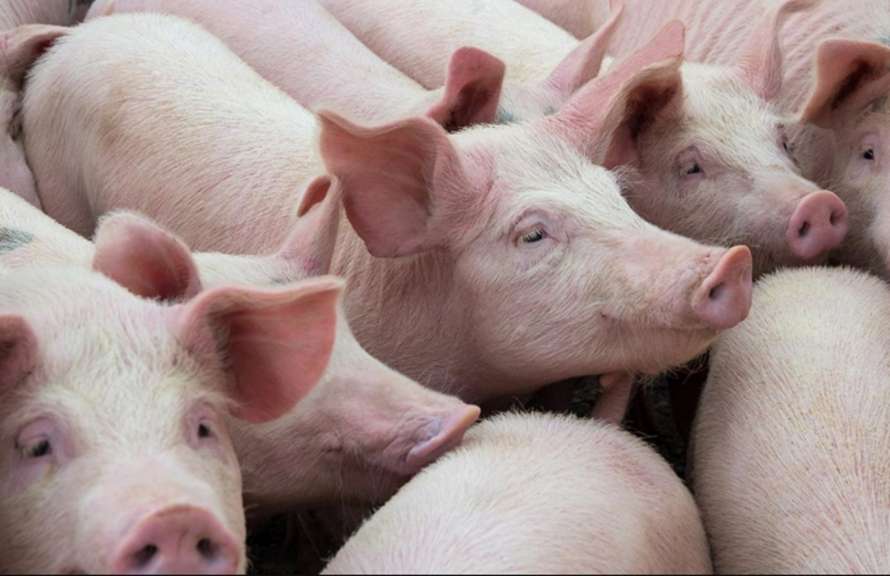
Ukraine has great prospects for increasing its pig herd up to the levels of 1991, after which it fell fourfold.
These data were made public by Mykola Babenko, head of the Meat Industry Association and the public union “Center for improving efficiency in livestock farming,” at a press conference at the Interfax-Ukraine agency on Monday.
“The situation (in the pig farming industry – IF-U) changed fundamentally in 2022 in the world, as did grain exports in Ukraine. Ukraine has effectively lost the added value on exported grain. At the same time, industries with high added value, which can export large volumes with logistics needs ten times lower, remain at the development stage. This is primarily about the meat industry,” – he said.
According to the head of the industry association, Ukraine currently produces about 600 thousand tonnes of pork and meets domestic consumption. Notably, until 2022 the domestic market was not supplied by domestic producers, so to satisfy consumption Ukraine had to import 10-30% of pork every year.
In 2022, world pork prices doubled, which made importing pork into the country economically unviable. At the same time, meat consumption in the country declined. The blocking of grain exports and the loss of economic profitability of grain production, and the reorientation of farmers toward producing and exporting pork, are becoming obvious, Babenko explained.
He drew attention to the fact that world pork consumption grows by 2 million tonnes every year and that by 2030, according to forecasts by the OECD (Organisation for Economic Co-operation), its consumption volume will grow by 16.5 million tonnes. Ukraine, which produces 600 thousand tonnes, can and should pay attention to this segment, which is growing dynamically in quantitative and monetary terms.
Ihor Liakhovskyi, head of the export group of the “Meat Industry” Association and founder of Agro-Invest LLC, recalled that after the start of hostilities in Ukraine a significant share of the consumers who had created demand for pork left the country. At the same time, farmers managed to increase pig production back to the pre-war level.
“Imports of meat products into Ukraine are declining. This is the first warning sign that the domestic market is filling up. (…) Representatives of the processing industry and farmers meet every Friday to discuss prices and purchase volumes. (…) We have had an outflow of the population, and accordingly there are fewer consumers. The main buyer on the domestic market has become the Ministry of Defence, which purchases 30–35% of the pork produced by industrial producers. Once it has made its purchase, it stays out of the market for the next few weeks, and prices on it fall. Even when raw materials are in short supply, the purchase price paid to processors drops during this period,” said the processor.
He expressed confidence that the only way out of the situation, in order to maintain the positive dynamics and profitability, is to enter foreign markets, where high-quality Ukrainian products can find their place without much effort.
Liakhovskyi is also convinced that most processing enterprises are ready to enter the export market. According to him, processing enterprises are not standing still. He stressed the importance of government bodies supporting the export entry of Ukrainian processors and noted that a lack of attention to the sector in the current situation threatens a rapid transformation of the domestic market into one with a surplus. After that, farmers' interest in pig farming would, with a high degree of probability, decline, and state support, lending to the sector and existing investment programmes would lose their value.
“As of May 1, there are 5.1 million pigs in all categories of farms in Ukraine. Of these, 66.5% come directly from organised production at industrial enterprises. The pig population kept by households is constantly shrinking. However, over the past year there has been decent growth at commercial enterprises, which is what changed the situation on the domestic market,” reported Ihor Vyshtak, director of the agrarian development department of the Ministry of Agrarian Policy and Food.
According to him, in 2023 sales of meat from all types of farm animals exceeded 3 million tonnes, which is 1.3% more than a year earlier. Of this, 56% was poultry meat, 28% pork and only 14% beef. Vyshtak confirmed that the Ministry of Agrarian Policy understands the potential of pig farming, where it is possible to build up the herd in a short time. The ministry also records a decrease in imports and growth in domestic production on the internal market.
Taras Mykolaienko, executive director of Ukrbioethanol, who attended the press conference, stressed the importance of developing livestock farming, which is an accompanying business that influences the development of bioethanol. As an example he cited China's experience: it implemented a programme for using a 5% bioethanol share in transport not for environmental reasons, but precisely in order to develop pig farming.
“Before the war, China bought 8–12 million tonnes of corn to produce bioethanol and, accordingly, cheap protein. It is used to build up meat (…) China borrowed this experience from the Americans and Europeans and already ranks third in the world in bioethanol production,” he said.
Speaking about America's experience, Mykolaienko recalled that in that country 40% of all corn, or 120 million tonnes, is processed into bioethanol, which is four times more than this crop yields in Ukraine as a whole. It was bioethanol that became the by-product that turned the U.S. into the world leader in poultry meat exports.
“Ukraine can gain added value of EUR 6 billion from developing pig farming on dry feed, and with cheap proteins – bioethanol waste – it could be EUR 12 billion; Ukraine must be provided with cheap proteins. If this is not done, we will always lose the competition to the Americans or Europeans, who have introduced bioethanol programmes,” stated the head of Ukrbioethanol.
He noted that in wartime it is extremely important to develop energy independence, and increasing domestic bioethanol production will allow Ukraine to reduce imports of petroleum products, of which more than $400,000 worth is purchased every hour.
Mykolaienko also recalled the importance of adopting bill No. 3356-d in the second reading, which will be fundamental for the bioethanol industry.
UkraineInvest’s acting executive director Oleksandr Melnychenko, for his part, drew attention to the fact that, in wartime, Ukraine has developed and is implementing a system of investment policy and practice.
“A modern, pro-European investment legislation has been created in Ukraine. Two months ago the formation of this legislation was completed, and it has started working at full strength. This legislation includes, in particular, such a concept as attracting significant investments. The law on state support for investors with significant investments provides that an investor whose investment amounts to EUR12 million plus ten jobs receives a whole list of preferences from the state,” Melnychenko said.
Among such preferences he listed the investor's exemption from VAT, land fees and customs duties, assistance in obtaining a land plot and others, which allow the investor, after concluding a special investment agreement, to receive a 30% reimbursement of investment costs, in particular in the form of reimbursement of the costs of engineering the transport infrastructure, as well as a number of other preferences.
Melnychenko was reminded that UkraineInvest is already working and studying a number of investment projects that will be presented to the Ministry of Economy. Particular attention is paid here to the processing industry. And the right to use this law belongs not only to a foreign investor but also to a national producer.
Ihor Vyshtak, director of the agrarian development department of the Ministry of Agrarian Policy, stressed that Ukraine has begun the process of screening its legislation for compliance with European legislation. By the end of the year the government expects comments and recommendations on it. After that, export prospects will open up for the pig farming sector. The government believes that Ukrainian producers will be able to bring their products to countries in Africa and northern Asia, and hopes to the European Union as well.
The “Meat Industry” Association invited everyone interested in the development of the sector to join the Forum “Grain. Pigs. Meat”, which will take place on June 12 in Kyiv.