From the first signals to daily changes: three stories of early intervention
The stories of the families of Danya, Myron and Davydko – from the first worries and examinations to the daily steps that support the children's development. At first there were repeated examinations, anxiety and questions to which the families did not yet have answers. At different stages, the families turned to the early intervention team of the public organization “Vidchui” – the specialists helped the parents better understand their children's needs and determine the next
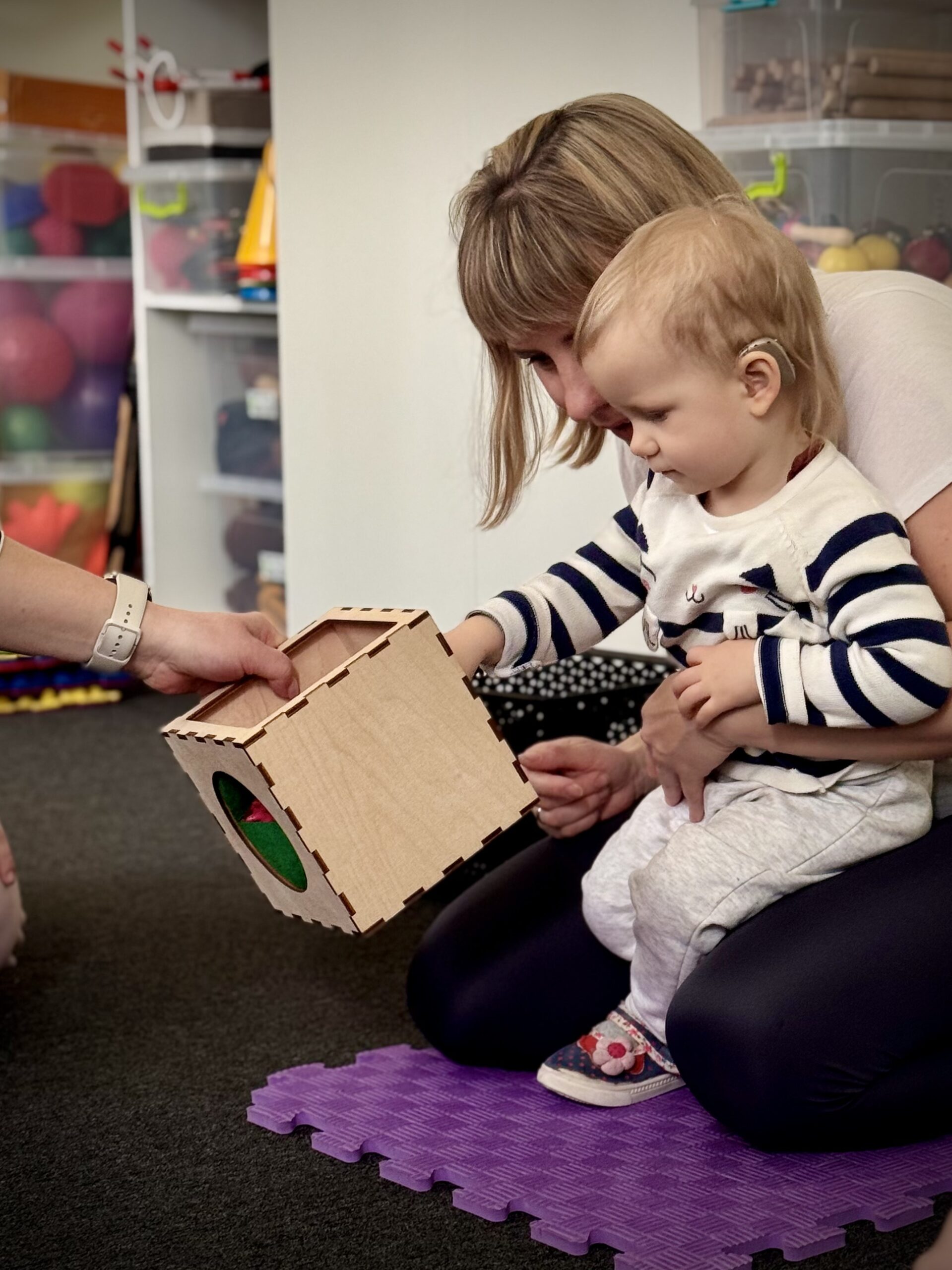
The stories of the families of Danya, Myron and Davydko – from the first worries and examinations to the daily steps that support the children's development.
At first there were repeated examinations, anxiety and questions to which the families did not yet have answers. At different stages, the families turned to the early intervention team of the public organization “Vidchui” – the specialists helped the parents better understand their children's needs and determine the next steps.
The stories of Danya, Myron and Davydko are different. But each shows that supporting a child's development does not happen only during a meeting with a specialist. It continues at home – during play, dressing, preparing meals and other everyday activities.
Early intervention is a family-centered, comprehensive service for young children and their families. Specialists help parents identify immediate goals and put useful strategies into daily life.
The first signals that are important to notice
The family learned about Myron's hearing impairment while still in the maternity hospital. For his mother, the news was a shock.
“For a few seconds I stopped hearing everything around me,” recalls Myron's mother.
After the first shock, the main question was no longer only about medical help but also about how to support the child and what to do next.
The family had been eagerly awaiting Danya. The older son wanted a little brother, and the parents were preparing for the birth of their second child. In the maternity hospital, Danya's hearing screening was repeated several times. At first the parents were told that temporary causes might have affected the result. However, the readings did not change, and after an additional examination the specialists confirmed hearing loss in both ears.
Davydko also failed the hearing screening after birth. At first his mother was not worried, since such a result could be temporary. About two weeks later she noticed that the baby was not reacting to sounds the way she expected. She clapped her hands, used toys that make sounds and felt more and more strongly that the test needed to be repeated. When Davydko was three months old, an extended examination confirmed hearing loss in both ears.
A lack of response to the voice of a loved one or to loud sounds can be one of the signals that the child's development should be assessed further. Such signals also include difficulties with movement, play, communication, eating or sleeping, as well as the loss of a skill already acquired.
These signs are not a diagnosis. They mean that parents' concerns should not be ignored and that it is better not to put off a conversation with a specialist.
In the first episode, the mothers tell how they noticed the first signals and what they felt after the examination results.
[EMBED THE YOUTUBE VIDEO HERE]
Episode 1. “Detection”
YouTube: https://www.youtube.com/watch?v=ElmNOn32Y5Y
Embed: https://www.youtube.com/embed/ElmNOn32Y5Y
Acceptance does not happen in a single day
After the examinations and the specialists' conclusions, the families reacted in different ways.
Danya's parents at first told no one about the examination results. They hoped that the next check would change the conclusion. His mother hid her tears from her loved ones and then gradually began to accept the new reality. At eight months, hearing aids were fitted for Danya. The family watched his reactions and looked for people who could help support the child's development.
Davydko's mother remembers the silence in the car after the trip to the examination. She wrote a short message in two family groups: Davyd cannot hear them. After that, loved ones began to call, offer help and assure her that the family would not be left alone.
The support of her brother became important for Myron's mother. He searched for doctors in different cities, reminded his sister of her ability to cope with difficult situations and actively helped look for doctors. Myron's mother later learned about “Vidchui” and found herself among people who understood her questions without long explanations.
Acceptance does not mean that fear or doubt never return. It is a gradual process. The family receives information, finds support and moves from the question “why did this happen?” to the practical “what can we do today?”.
In the second episode, the families talk about their confusion after the impairments were established and about the support that helped them move forward.
In the second episode, the families talk about their confusion after the hearing impairments were established and about the support that helped them move forward.
[EMBED THE YOUTUBE VIDEO HERE]
Episode 2. “Acceptance”
YouTube: https://www.youtube.com/watch?v=9lcWqO2YcyI
Embed: https://www.youtube.com/embed/9lcWqO2YcyI
The first meeting: getting to know the child and the family's request
Davydko's mother learned about the early intervention service provided by “Vidchui” on the internet. She filled out a questionnaire, after which the family was invited to a free consultation with a team of specialists.
Before the meeting, the parents doubted whether they really needed it. However, the specialists did not begin with a list of problems or mistakes. They joined Davydko's play and observed how he interacts, what attracts his attention and what support he needs.
Already during the first consultation, Davydko quickly joined in the shared play with the specialists and kept up his interest in the interaction throughout the meeting – for the family this was evidence that the team could make contact with the child and help develop his communication. In time, Davydko began to recognize the building already on the way from the metro and ran toward it with joy.
Danya's story shows another format of work – a home visit. The early intervention specialists met the boy in a space that was familiar and safe for him. He immediately began to show his favorite toys, and the team was able to see his usual play and his interaction with his mother.
As Danya did not yet use spoken language, the specialists focused on how he understands words addressed to him, maintains joint attention and communicates his wishes. Together with his mother, they chose short words, gestures and actions that can be used during ordinary play.
The aim was not to hold a showcase session but to find techniques the family could use on their own.
The natural environment need not be only the apartment. The meeting can take place on a playground, in a kindergarten or in another place where the child encounters a specific difficulty.
The team works with a real situation. For example, it helps the child join in play, ask for what he or she wants, understand the sequence of actions or take part in an everyday activity.
In the third episode, specialists and parents show how the goals of early intervention are combined with the family's ordinary activities.
[EMBED THE YOUTUBE VIDEO HERE]
Episode 3. “How It Works”
YouTube: https://www.youtube.com/watch?v=T8AvP1yMAWM
Embed: https://www.youtube.com/embed/T8AvP1yMAWM
Changes that can be seen in ordinary life
Work in early intervention is not limited to meetings with the team. After the consultation, parents use the agreed techniques at home: during play, meals, getting dressed, walks, cleaning or cooking together.
At the next meeting, the family and the specialists discuss together what worked, where difficulties arose and what should be changed.
At the time of filming, Myron was two years and nine months old. He was beginning to dress himself, communicated his needs and held a spoon. Together with his mother and older sisters, the boy helped make an omelet, knead dough, shape varenyky and wash dishes.
Davydko's changes also became noticeable in everyday life. At the time of filming, he was learning to put on socks and a T-shirt by himself, to ask to go to the toilet, and to show and verbalize his wishes. The boy helped his mother cook and especially loved vacuuming: he wanted to hold the vacuum cleaner himself and watched as every speck of dust disappeared.
In Danya's family, an important result was not only the child's new skills but also the parents' confidence. After about half a year of systematic support, they saw changes and gradually learned to assess the situation on their own and plan the next steps.
“We are already well prepared and know exactly how to act,” says Danya's mother.
Progress is not always even – sometimes meetings have to be interrupted because of the child's health or other circumstances in the family. This does not mean that parents should turn every minute into a lesson.
The early intervention team does not replace parents in supporting the child. Its task is to help the family choose a few achievable steps and fit them into ordinary life so that they do not become an additional exhausting obligation.
A sock, a spoon, a gesture or a shared game show concrete changes in the child's independence, communication and participation in daily life.
Early intervention changes more than the child's daily life. Parents understand the child's signals better, respond more confidently in difficult situations and know whom to turn to for additional help. The family's confidence is precisely one of the main results of the service.
In the fourth episode, the families show changes that are best seen not in tables but in ordinary daily activities.
[EMBED THE YOUTUBE VIDEO HERE]
Episode 4. “Changes”
YouTube: https://www.youtube.com/watch?v=oHfnJY7gZng
Embed: https://www.youtube.com/embed/oHfnJY7gZng
How a family's journey can begin
The stories of Danya, Myron and Davydko are different. In one family, the first signal was noticed in the maternity hospital. In another, doubts appeared at home. Some needed time to tell their loved ones, while others began looking for doctors and organizations almost at once.
What the three stories have in common is the moment of seeking professional support – when information, concrete steps and people to discuss them with were added to the parents' questions.
The early intervention service is intended for families with children from birth to the age of four who have developmental disorders or are at risk of developing them. An established diagnosis is not required for the first contact. The basis can be the parents' concern about the child's development.
How to contact the early intervention team
If you are concerned about your child's development or want to learn more about the early intervention service at “Vidchui”, write to vidchui@ukr.net or call +380 63 722 32 20.
In your message, please state:
- the child's name and age;
- the city of residence;
- what exactly is causing concern;
- a phone number or another convenient way to reach you.
The first step can be a simple question from a parent. What matters is that the family is not left alone with it and receives a clear plan for further action.
This publication was prepared by the public organization “Vidchui” within the project on providing financial assistance in the form of small grants for social services, implemented with the support of the Government of the United Kingdom under the SPIRIT project, in cooperation with the Ministry of Social Policy, Family and Unity of Ukraine, the Fund for the Social Protection of Persons with Disabilities and UNICEF Ukraine, and administered by ISAR Ednannia. The content of this publication is the sole responsibility of the public organization “Vidchui” and does not necessarily reflect the position of the Government of the United Kingdom, the Government of Ukraine, UNICEF, ISAR Ednannia or the Fund for the Social Protection of Persons with Disabilities.


