The “Khlibna Industriia — 2025” forum in Uman: the market's main event shaping the vector of change
On June 12–13, a key industry event took place in Uman — the business forum “Khlibna Industriia — 2025”. More than 200 participants from all over Ukraine — business owners, technologists, analysts, representatives of the government, industry associations and suppliers — gathered to outline a shared vision for the future of the baking, flour-milling and grain-processing industries. The event was organized by the All-Ukrainian Association of Bakers, the Union “Flour Millers of Ukraine” and Agro Marketing Agency. This year's event was hospitably
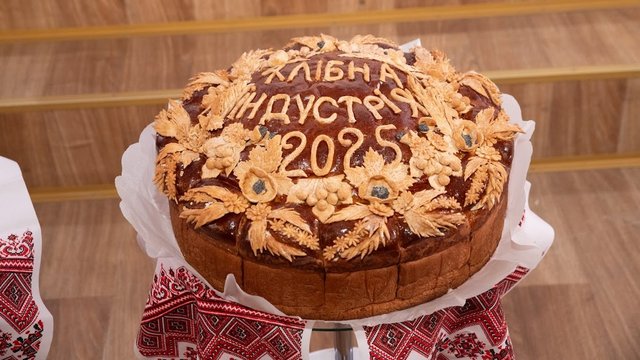
On June 12–13, a key industry event took place in Uman — the business forum “Khlibna Industriia — 2025”. More than 200 participants from all over Ukraine — business owners, technologists, analysts, representatives of the government, industry associations and suppliers — gathered to outline a shared vision for the future of the baking, flour-milling and grain-processing industries.
The event was organized by the All-Ukrainian Association of Bakers, the Union “Flour Millers of Ukraine” and Agro Marketing Agency. This year's event was hospitably hosted by Uman National University — one of the country's leading agricultural universities.
The general partner was Lesaffre Ukraine, quality control partner – SocTrade, special partner – Uni Blend, regional partners – Umanhlib and Umanpyvo, banquet partner – Bistro Pekaria, Experts Club – official information and analytical partner of the forum. The forum was supported by – Cherkasy Regional Military Administration, OLIS, TM “Voloshkove Pole”, Cherkasy Khlib, Wine of Ukraine, Food & Drinks, Ukrvynprom, Agro 2 Food, World Food Ukraine, Ukrkondprom. Official information partner – “Interfax-Ukraine“.
The forum brought together three thematic sessions, an industry discussion, practical insight sessions, master classes and an exhibition of solutions — the event was designed as a platform for exchanging ideas, cases and analytics that already today affect the efficiency and resilience of business.

The State's Position: Dialogue, Support, Forecasts
The first day of the forum opened with a session devoted to government policy and its impact on the processing industry. The first deputy minister of agrarian policy Taras Vysotskyi presented an updated harvest forecast for 2025, as well as the state support mechanisms available to processors. The focus was on the ministry's openness to systematic dialogue with the market, in particular to adapt programs to the real needs of enterprises.
Roman Kropyvnytskyi, director of the relevant department of the Ministry of Economy, stressed the importance of making effective use of existing state support instruments, urged business to provide active feedback and emphasized that strategic change is possible only if all players in the chain work together.
The director of the department of the State Labor Service of Ukraine Oleksandr Ihnatov reported on upcoming updates to labor legislation, which are intended to take into account real employment relations between employer and employees. The topic aroused lively interest in the audience, since it directly concerns the work of manufacturing enterprises.
From the agricultural market there were constructive signals: the head of the VAR Andrii Dykun focused on price risks and the uneven profitability of wheat producers in 2025, while the UKAB analyst Oleksandra Avramenko pointed to the challenges associated with harmonizing Ukrainian legislation with EU standards.

Flour-milling industry: export pressure and the struggle for raw materials
The key attention was on the availability of food wheat and the stability of the domestic flour market. Rodion Rybchynskyi, director of the Union “Flour Millers of Ukraine”, noted that since the start of the full-scale armed aggression in Ukraine, flour production has fallen significantly and the structure of its exports has changed. Two problems are critical for the industry today – the availability of raw materials because of active wheat exports, and the return of quotas on exports of products to EU countries, which have become the key sales market for Ukrainian flour over the past three years.
For his part, Maksym Rykhlivskyi (“Niusfera”) drew attention to the loss of the domestic rye market — the crop has practically ceased to be grown, which leads to import dependence in the production of rye flour and the risk of the complete disappearance of the corresponding varieties of bread.
Maksym Urakin (Experts Club, Interfax-Ukraine) analyzed the macroeconomic influences on bread production and consumption trends. He noted that in 2025 key macroeconomic indicators are coming to the fore again. Inflation, forecast at 12%, raises the question of how costs affect consumption. Price changes for certain products are felt in the country's economy and may significantly change business models. At the same time, according to M. Urakin, the forecast GDP growth of 2.9% opens up new prospects, but variations in the key interest rate and the hryvnia exchange rate, which may aggravate the situation in the coming years, must also be taken into account.
Olena Lapshova (Lesaffre Ukraine) provided the international context: consumers expect a product to be not only environmentally friendly but also to come with proven evidence of quality, simplicity and benefit. These global trends will continue to influence the development of the Ukrainian industry, so even today they should be taken as a guide for developing one's business. Nataliia Savosina (SocTrade) focused on full quality control — from the field to the shelf. Her presentation was devoted to technological solutions that ensure accuracy and safety at every stage of the production of flour and bakery products.

Technology, marketing and new development priorities
The third session of the forum was devoted to modern technological solutions and marketing approaches shaping the future of the bread industry. The block was moderated by Yurii Duchenko — first vice president of the VAP and director of the limited liability company “Kyivkhlib”. Opening the session, he noted that the quality of Ukrainian flour is not only a guarantee of stable domestic consumption but also the key to success on foreign markets. The Ukrainian industry already has the potential to meet the highest standards, but it needs a single vision and investment in the stability and traceability of quality.
Professor Dmytro Zhyhunov outlined the main challenges related to the state of Ukrainian wheat, in particular in terms of baking properties. He noted that the industry needs a systematic analysis of the raw material base and a rethinking of the criteria for selecting grain — taking into account the intended use of the flour.
Svitlana Shynkarenko, head of the technology department at Lesaffre Ukraine and a candidate of technical sciences, spoke in her presentation about how freezing technologies not only optimize logistics or make production forecasting easier but also become a driver for creating an emotional product that meets the expectations of the modern consumer. She paid particular attention to fermentation control under freezing conditions, the preservation of organoleptic properties and the role of yeast solutions in shaping flavor.
Serhii Tsekhmistrenko, director of Uni Blend, spoke about targeted technological solutions as an element for improving the efficiency of bakery production. His presentation included specific cases — the introduction of adaptive blends tailored to the requirements of a particular enterprise, the modification of recipes to improve baking stability, and examples where the use of blends made it possible to reduce production losses and increase the yield of finished products.
Oleksandr Vereshchynskyi, doctor of technical sciences and co-founder of the company OLIS, gave a presentation that became a concentrate of strategic advice for owners and engineers of production enterprises: how to avoid typical mistakes in design, which units require the most careful attention, and how to combine energy efficiency with grinding precision. He also stressed the importance of integrating laboratory control into the real cycle of milling production — as a tool for stability and economics.
The presentation by Olena Sinitsyna, founder of Favorite Food&Drinks, was a practical guide to negotiating with foreign retailers: new requirements for documentation, logistics, recipes, price indexation and compliance with local standards. She noted that Ukrainian producers have serious chances of concluding contracts — provided they show flexibility and professional preparation.
The session was wrapped up by Bohdan Shapoval (Ukrainian Food Association), supplementing the discussion with information on Private Label trends in the EU, the role of Ukrainian industry associations in promoting products, and the barriers that still need to be removed for sustainable exports. He stressed that the new stage of cooperation with European retail chains is a challenge, but also an opportunity for Ukrainian companies to become part of the global supply chain.
This block of the forum clearly demonstrated that technology and marketing are becoming increasingly integrated. The future of the bread industry belongs to personalized solutions, precise investments, flexible production and a systematic marketing presence on the market.
A discussion that may change the rules of the game
A separate block was the public discussion between bakers and retail chains. Frank, dynamic and at times confrontational, it became the culmination of the first day. The moderator was Liudmyla Khomichak (Ministry of Agrarian Policy). The focus was on pricing, logistics, the specifics of contracts and quality requirements. The participants agreed that this conversation should be regular and that its result should be a revision of procurement policy in terms of the predictability and fairness of conditions for both parties.
An intensive from Lesaffre and a master class by Uni Blend
The second day of the forum opened with a series of insight sessions by Lesaffre Ukraine. Participants worked in depth on the topics of optimizing dough preparation, innovations in fermentation and efficiency in freezing bread products. After the session, the Uni Blend team held a practical master class at Uman National University, where it presented modern blends, baking technologies and approaches to adapting recipes.
The forum “Khlibna Industriia — 2025” became an event that does not merely record the problems but offers solutions — strategic, tactical and applied. It outlined the challenges, brought the market together on one platform and launched important processes — from revising procurement policies to updating technological approaches. Ahead lies a difficult marketing season, new trade rules with the EU and the fight for the consumer. But after “Khlibna Industriia — 2025” the industry emerges with new reference points. The next meeting will be in 2026. And, given the dynamics, it will be even bigger.
Interfax-Ukraine – information partner