Private clinics are ready to work in the PMG but propose a review of approaches to forming its packages in order to reduce the cost of medical services
Private medical institutions are ready to work under the medical guarantees programme (PMG) and propose a review of approaches to forming some PMG packages, which would reduce the cost of medical services and optimize budget expenditure. Members of the Association of private medical institutions (APMZ) said this at a press conference at the Interfax-Ukraine agency on Thursday. The deputy director general of the medical laboratory “Synevo,” Mykola Skavronskyi, noted that
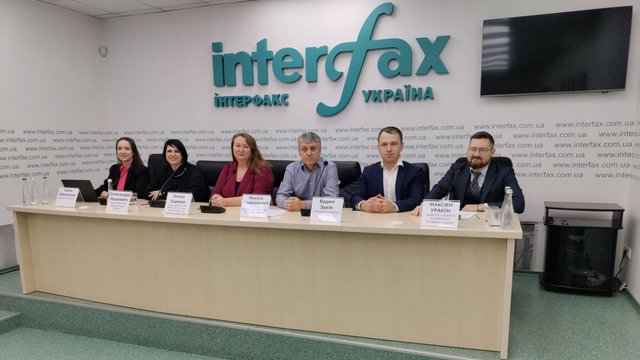
Private medical institutions are ready to work under the medical guarantees programme (PMG) and propose a review of approaches to forming some PMG packages, which would reduce the cost of medical services and optimize budget expenditure.
Members of the Association of private medical institutions (APMZ) said this at a press conference at the Interfax-Ukraine agency on Thursday.
The deputy director general of the medical laboratory “Synevo,” Mykola Skavronskyi, noted that since the beginning of the war the laboratory has not stopped working, despite the fact that during 2022 Synevo lost more than 30 branches in various regions.
“It is rather sad to see that recovery programmes exist only for state or municipal medicine. At the same time, the fact that private medicine suffered from the war just as much is completely ignored. But, unlike state and municipal medicine, all private providers are recovering and continuing to work with their own or borrowed funds, not with budget funds and without assistance,” – he said.
Commenting on Synevo’s first experience of cooperation with the NHSU in 2024, Skavronskyi noted that the laboratory’s entry into the PMG “became a kind of searchlight that illuminated the situation in the laboratory sector in Ukraine as a whole.”
“I can say that the state does not know or understand the real need of doctors and patients for laboratory diagnostics. At present it is assumed that laboratory diagnostics are needed as much as are ordered, not as much as are actually needed. Synevo’s cooperation with the NHSU revealed that in Ukraine there is simply a gigantic unmet demand for laboratory diagnostics: in March of last year alone we performed almost 730 thousand tests for 72 thousand people, and we saw that of those people who came to us under the PMG, two thirds are new people,” – he said.
Skavronskyi noted that at base prices Synevo performed tests worth about UAH 528 million, at the applied rates the cost of the analyses amounted to about UAH 200 million, while the NHSU paid UAH 44 million for them.
“We asked the NHSU to single out a laboratory package that would be transparent and clear, where it would be clear which tests and, most importantly, which doctors can prescribe them and in what quantity. Because it turned out that there are no restrictions at all, doctors prescribed tests that should not have been prescribed. It should not be up to the laboratory to decide what to do and what not to do; there must be a system that simply does not allow prescribing anything wrong,” – he said.
According to Skavronskyi, one of the most sought-after tests funded from the budget in 2024 was the vitamin “D” test, of which the laboratory performed about 100 thousand.
“I do not think Ukraine is such a rich state that it can cover vitamin ‘D’ tests in such volumes at taxpayers’ expense. But doctors prescribe them. Why doctors prescribe them is more a question for the doctors and for pharma,” – he stressed.
Skavronskyi also emphasized that the implementation of the proposals developed by the laboratory made it possible “not only not to increase the tariff, but even to reduce it.”
“As a private laboratory we would be ready to work with tariffs 15% lower, but on the condition of clear criteria. In recent years we heard that the money follows the patient, but during last year, especially the first quarter, we saw that the money does not follow the patient,” – he remarked.
For his part, the chief operating officer of the multidisciplinary medical center “Leleka,” Vadym Zukin, recalled that Leleka is the only medical center in Ukraine that holds international JCI accreditation, with the clinic receiving its latest confirmation at the end of 2024.
“Literally two months before the start of the full-scale invasion, the minister of health came to us with his deputy and we discussed how these standards could be implemented for other market players. But now it looks as if the state is sailing its own ship, while we, in some little boats, are trying to catch up with the Ministry of Health and convince it of something,” – he explained the situation.
Zukin stressed that “the state should understand that it is more advantageous for it to become a purchaser of medical services rather than their provider, and not to invest in fixed assets, since private operators already have these assets.”
He also expressed the opinion that the NHSU should conclude longer-term contracts for participation in the PMG.
“Now for certain PMG packages three-year contracts will be concluded, which is better than one year, but it means nothing, because in Europe and in the USA they think in terms of seven, 10, 15 years,” – he said.
Zukin believes that “at present the reform has begun to move somewhat in the opposite direction from the principle that the money follows the patients; I would like to bring it back onto the right track.”
For her part, the medical director of the “Dobrobut” medical network, Oleksandra Mashkevych, noted that the network is a major taxpayer and has 3 thousand employees, including 1,300 doctors. At the same time, 131 Dobrobut employees have been mobilized, and the clinic continues to pay them salaries.
“We have been designated by the Ministry of Health as critical infrastructure. In 2024 we invested almost UAH 0.5 billion in our development, of which we spent a large part on our energy efficiency. I want to note that investments in the energy efficiency of state and municipal institutions are made not at their own expense, but at the expense of the state or donors or sponsors. And we do this on our own,” – she said.
At the same time, Mashkevych emphasized that Dobrobut’s cooperation with the NHSU is “quite interesting.” In particular, the clinic was contracted for the package of assisted reproductive technologies, under which 300 patients have completed treatment cycles and almost 45% of women already have a confirmed pregnancy.
“The tariff for this service was too low for us, we worked at a loss, understanding that in this way we were lending a shoulder to the state; in fact, we gave the state the opportunity to use our capacities to provide free medical services. We had long rounds of negotiations with the NHSU, the Ministry of Health and the Ministry of Finance, they heard us and did increase the tariff. This tariff does not cover all our costs, nevertheless we continue to work with it,” – she said.
Commenting on plans for working with the NHSU, Mashkevych noted that Dobrobut plans to expand its participation in the PMG-2025 and is awaiting the NHSU’s decision on contracting for new packages.
At the same time, Mashkevych called the possibility for private institutions to use the unified state portal of medical vacancies launched by the Ministry of Health a positive decision.
The press conference was organized by the Interfax-Ukraine agency and the Association of private medical institutions.