Ukrainian exporters and the Cabinet of Ministers must speed up decarbonization in view of the CBAM mechanism taking effect in the EU from 2026
Ukrainian exporters of products to EU countries and the Ukrainian government must pay more attention to the problem of decarbonization within the Green Deal strategy and, in particular, to CBAM – an additional tax on goods with a high carbon footprint in production, which takes effect from 2026. This view was expressed by experts and company representatives during a roundtable on Tuesday
Ukrainian exporters of products to EU countries and the Ukrainian government must pay more attention to the problem of decarbonization within the Green Deal strategy and, in particular, to CBAM – an additional tax on goods with a high carbon footprint in production, which takes effect from 2026.
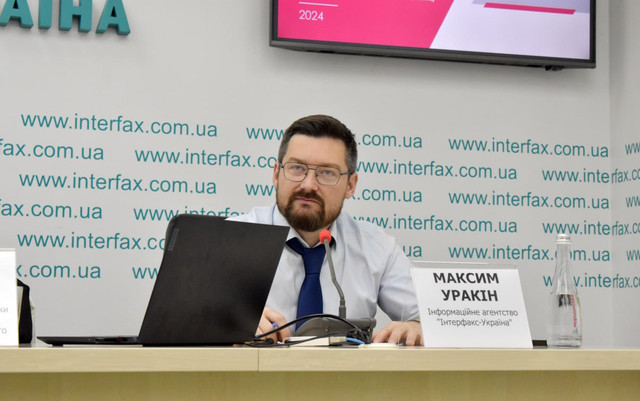
This view was expressed by experts and company representatives during a roundtable on Tuesday on the topic “The impact of CBAM on domestic exporters,” which took place at the press center of the Interfax-Ukraine news agency.
Olha Kulyk, director of the department of energy ecology and the “green” economy at the Federation of Employers of Ukraine, noted that CBAM is very important and affects exporters, every enterprise.
According to her, during a recent business trip she spoke with representatives of enterprises and organizations in Europe, who are collecting information from reports under CBAM. At the same time, while the requirement to verify emissions reports is being implemented by European companies, Ukrainian enterprises have problems in this area, in particular, Ukrainian verifiers must be accredited by the European Commission.
“Verification based on data – time is running out fast, and we cannot drag these problems out. Therefore, the Ministry of Economy together with the Ministry of Environment will hold negotiations so that verification is accredited by the EC. But so far the issue has not been resolved,” – Kulyk said.
On the other hand, according to her, European countries also have certain problems with uniform regulation of a number of issues and with the next steps in implementing the “green” initiative. A working group needs to be created, and Ukraine needs to receive an invitation to take part in its work.
The director of the information and analytical center GMK Center, Stanislav Zinchenko, for his part stated that by introducing the CBAM mechanism the European Union is protecting its markets. Similar mechanisms will continue to be introduced in other countries, such as the UK, the USA and Australia.
“This is a new wave of protectionism, it is ‘green’ protectionism, and it will march across the planet. It will lead to a reformatting of flows, but it will also help reduce emissions,” – Zinchenko predicts, adding that there is currently a shortage of emissions verifiers in the EU, in Ukraine and in the world.
“Fewer than 10% of the 20,000 companies in Germany that had to report on time did so. And in Ukraine there are also problems with reports and with methodology. It is a very raw procedure, a raw experiment, but it is starting to affect Ukrainian companies. There is not a single document on CBAM in Ukraine,” – the expert stated.
According to him, due to force majeure circumstances caused by the war, from 2026 Ukraine may not fall under the requirement to submit verified reports, but only declarative CBAM reports, without paying for certificates.
According to his data, if strict CBAM requirements enter into force, Ukraine's losses, calculated at 2023 prices, could amount to $600 million from pig iron exports (“minus” 1.4 million tonnes), $640 million for semi-finished products and $200 million for rolled products. In total, losses for metallurgical enterprises could reach $1.5 billion.
Other industries will also suffer losses.

“We do not see interest on the part of either the government or the ministries, which should be holding constant negotiations. And in the EU they are surprised why Ukraine is not taking an active part in this process. Unfortunately, some government employees believe that this is a problem for business, not for the Cabinet of Ministers,” – Zinchenko summed up.
Anzhelika Livitska, partner at Arzinger and head of the practice in energy and natural resources, environmental protection and sustainable development, stressed that CBAM is a mix of ecology and economics, and that Ukraine has obligations to implement EU legislation in Ukraine.
“We are implementing a number of regulations on waste management. And we expect more cooperation from the government and the ministries. We are unlikely to make it by 2050, but we have obligations,” – Livitska said.
According to her, mainly cement, steel, aluminum and fertilizers will fall under CBAM. Reports must be submitted by May 31 of each year, the first time by May 31, 2027, with the report for 2026. Failure to submit reports results in significant fines, from EUR10 to EUR50 for each tonne of emissions.
“The government needs to raise the issue of force majeure circumstances for Ukrainian enterprises,” – Livitska believes.
Lyudmyla Krypka, executive director of the Ukrtsement association, noted that Ukrainian enterprises have the option of submitting emissions reports on a declarative basis.
“We initiated such a procedure; we are not obliged to buy CBAM certificates under force majeure circumstances. We propose and ask that work within CBAM be carried out on a declarative principle,” – Krypka stressed.

The president of the Ukrmetalurgprom association of enterprises, Oleksandr Kalenkov, noted that metallurgical enterprises view CBAM as an irreversible process: “One way or another, it will be implemented, and it will be implemented all over the world; it will lead to some reformatting of trade worldwide.”
Previously, up to a third of metal products went to the EU; now the share has increased as a result of the blocking of the sea route, and it may grow if the blockade resumes.
“It is important for the government to join the process and pay more attention to it,” – Kalenkov stressed, noting that European companies receive certain subsidies for their development and modernization from this eco-initiative.
“The rules of the game for Ukrainian and European companies need to be leveled – force majeure conditions should be applied to Ukrainian enterprises. This issue must be approached comprehensively, taking into account the modernization of companies. The Ministry of Environment and the Ministry of Economy are involved in this process, but it is important to have one center that will manage it, so that a single position is conveyed to our European colleagues,” – said the head of Ukrmetalurgprom.

He also considers it necessary to create a competitive market of verifiers in Ukraine so that both local and European companies can operate here.
Earlier, Andrii Kryl, head of international relations of the Metinvest group, stated during the Ukraine’s Future Summit that soon a new obstacle for Ukrainian companies operating in the European market would be the carbon duty (CBAM), which will take full effect in 18 months. The top manager expressed hope that, thanks to dialogue between the Ukrainian government and the European Commission, these obstacles can be overcome and trade flows will remain uninterrupted.
For his part, Vladyslav Varnavskyi, director for ecology and industrial safety at Interpipe, noted at the “Exporters Summit” organized by Forbes Ukraine that companies should pay more attention to environmental projects within the EU requirements on the “green” economy – the Green Deal and CBAM. He added that although this topic is becoming ever broader and is not only political but also economic and social, in Ukraine not many companies pay attention to it yet, even exporters of products to the EU.
As stated on the European Commission's website, the “green” deal (Green Deal) is a strategy intended to bring the economy of the European Union to a modern, resource-efficient and competitive state through commitments to reduce greenhouse gas emissions by 55% by 2030 and to end them entirely by 2050.